The Real Reason Deals Don't Close
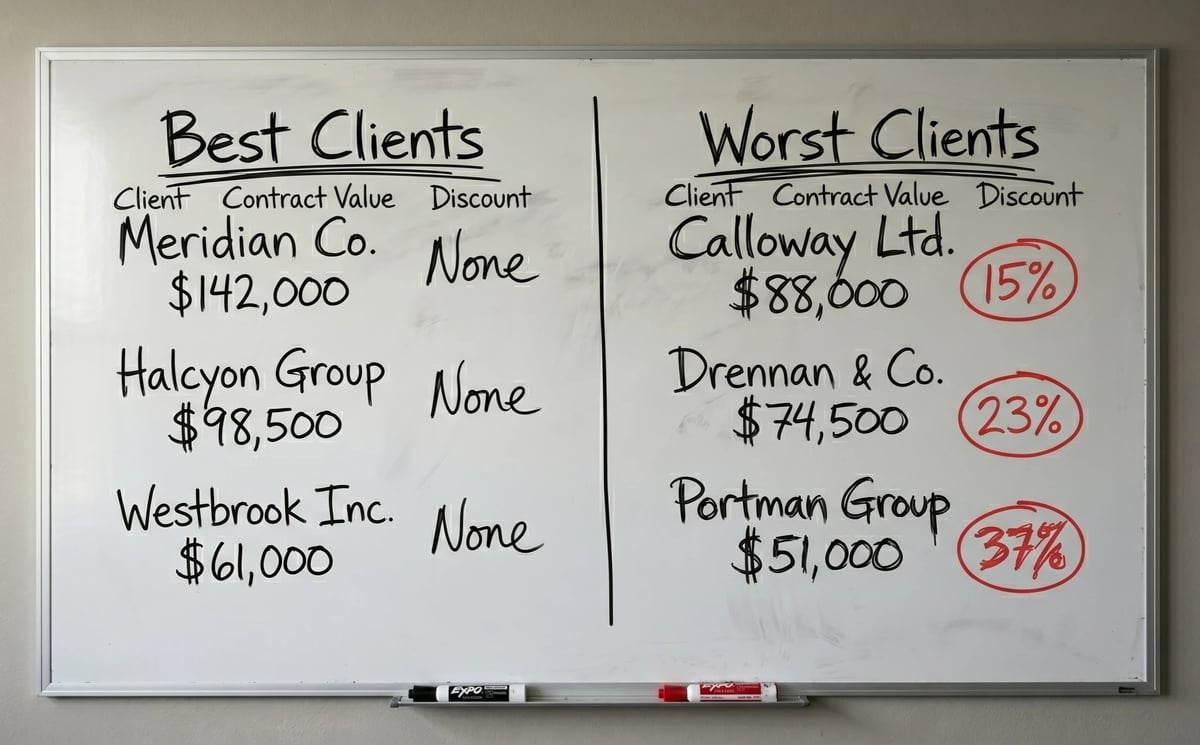
It's Not Objections. It's Misalignment. Most stalled deals are explained the same way but individually or collectively, they begin to function less as explanations and more as symptoms.
Thoughts on growth, leadership, and building businesses that scale without breaking.
It's Not Objections. It's Misalignment. Most stalled deals are explained the same way but individually or collectively, they begin to function less as explanations and more as symptoms.
The core issue: Your buyers don't see the problem the way you do, and that gap exists before they ever engage with your content.
If you are starving, you'll eat anything. That is the first line of our upcoming book. And it is not about food. It is about growth. When a company is starving for revenue, pipeline, margin, or time, it will take whatever it can get.
If your pipeline is full but revenue feels fragile, the issue is probably not sales execution. It is probably targeting discipline. In many $5M to $20M founder-led B2B companies, the Shotgun Trap does not start with strategy. It starts with pressure.
You are spending more, you are doing more but nothing is compounding. If every new growth initiative starts with optimism and ends with "it just didn't work," what is likely lacking is strategy not tactics.
You are not overwhelmed because you are growing too fast. You are overwhelmed because you keep postponing the strategic work that would make growth sustainable.
"We just need to hire a rockstar salesperson and we can grow." If that sentence sounds familiar, you may be in the Superhero Trap. Heroics can save a quarter. They cannot build compounding growth.
One of the most common conversations I have with founders begins with the same conclusion. We need more marketing. But working with clients across many industries, I have seen what often happens next.
The company is growing. The team is capable. Demand exists. Yet progress feels harder than it should. What I have learned from working with founder-led companies is that the friction usually begins somewhere deeper.
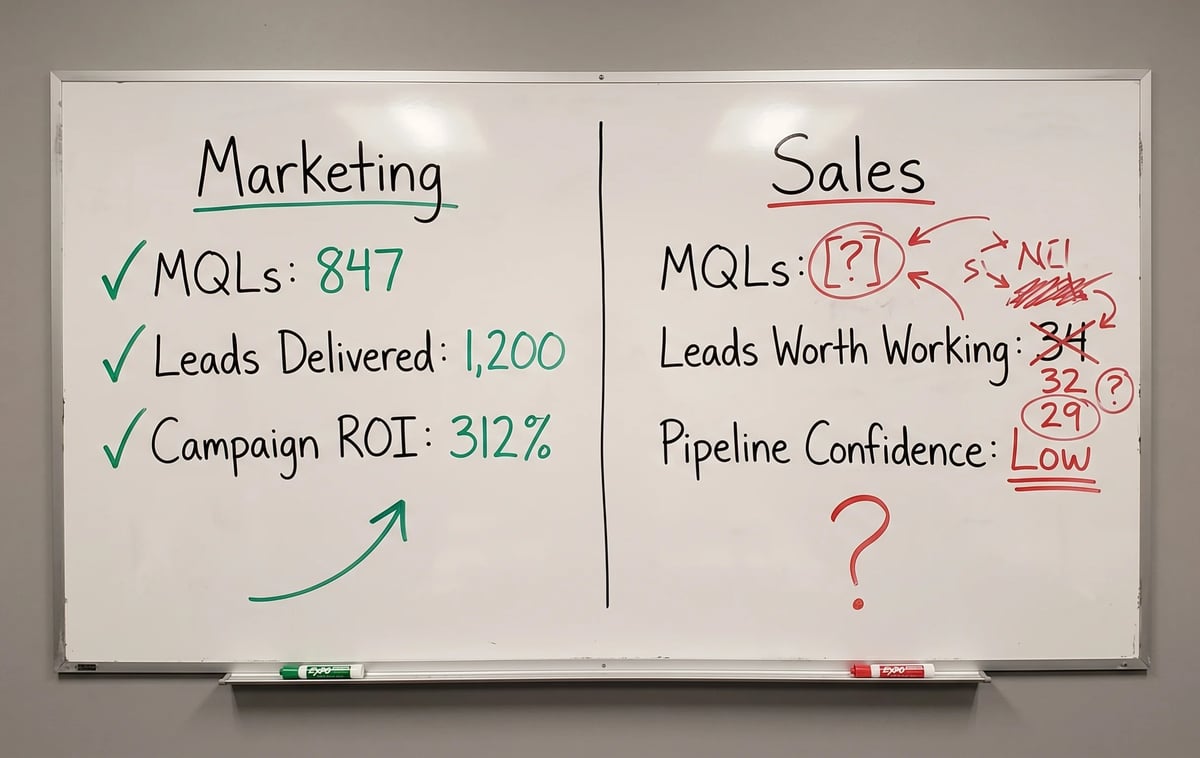
Growth rarely slows because teams stop working hard. It slows because teams start pulling in different directions. Inside many growing companies, the symptoms appear gradually. Marketing generates leads that sales does not trust. Sales closes deals that delivery struggles to fulfill.
The market does not reward solutions. It rewards relief from pain. Many founders assume their product or service struggles because customers fail to understand its value. But when a product consistently struggles to gain traction, the explanation is usually simpler.
Most companies believe their growth problems start in marketing or sales. They rarely do. The reason is structural. Many organizations begin scaling their growth engine before they have clearly defined the one thing that engine is supposed to revolve around. Their Core.
Most founders don't stop believing in awareness marketing because it doesn't work. They stop because it feels unprovable. Awareness marketing doesn't fail because teams execute it poorly. It fails because awareness is almost always asked to prove value in a way it was never designed to deliver.
Most companies design Customer Support to prevent churn. The best companies design it to compound growth. That difference determines whether progress stacks or resets.
You can publish for years and still be invisible when it matters. Not because your ideas are bad, but because your content is not reducing risk for the buyer.
Most founders think the sale begins when a buyer reaches out. But in reality, it is closer to the end. By the time a founder-led buyer takes that first call, their decision space is already constrained.
When we talk about the Core of the Flywheel, one element consistently determines whether growth becomes dependable: buying behavior. Not personas. Not demographics. The observable logic of how decisions move from curiosity to commitment under real conditions.
Most entrepreneurs don't suffer from a lack of ambition. They suffer from too much responsibility. Discover why "doing everything" is quietly breaking your business and how strategic neglect creates momentum.
Plans are good at describing what should happen. But when reality intervenes, when signals conflict, when learning stays siloed, growth starts to drift instead of compound. Jeffrey Romagni explains why the Growth Architect role exists and how it supports teams through the full lifecycle of a Flywheel Growth Engine.
AI podcasts aren't about producing content faster. They're about removing the founder from the critical path while preserving their voice, thinking, and credibility. Discover how thought leadership is evolving from effort to design to momentum.
At Series A and Series B, investors aren't just evaluating whether growth exists. They're asking whether it can be trusted to scale. Discover how predictable growth systems turn traction into investor confidence and why that matters more than metrics alone.
The strangest part of growing past $5M isn't that things get harder. It's that they get harder when everything says they shouldn't. Here's what actually breaks - and why working harder quietly makes it worse.
In 1519, Cortés destroyed his ships and forced a choice: victory or nothing. Every entrepreneur faces the same shoreline. Have you burned your ships, or are you still keeping one eye on the horizon behind you?
Most growth frameworks obsess over precision on the front end. But what quietly determines whether growth compounds or collapses is not just who you pursue, but what you refuse to take on. Disqualifiers and boundaries protect momentum.
The Spartans didn't believe battles were won in the clash of shields. They believed battles were decided long before the enemy ever appeared. Discover why the most important work happens when nothing urgent is happening, and how this ancient principle creates unstoppable momentum in modern business.
Most companies have an ICP defined. Yet selling still feels unpredictable. Deals move at different speeds. Forecasts feel like judgment calls. Jeffrey Romagni explains why ICPs stop working at the $5–20M stage and what it takes to move beyond firmographics to behavioral buying patterns.
Most prospecting systems don't fail loudly. They fail quietly. AI doesn't fix prospecting by automating more outreach. It fixes it by making end to end engagement design possible for the first time.
Most people think they're choosing friends, peers, or colleagues. What they're actually choosing is who they will slowly become. Your standards drift toward what is normal in the rooms you keep returning to.
Most founder-led companies between $8M and $15M hit a strange plateau. Revenue is real, operations work, customers stay. But growth stalls. Discover why the problem isn't effort or alignment. It's decision quality, and why sparring beats collaboration.
A practical, step-by-step guide with copy-and-paste prompts to turn AI into an adversarial sparring partner that exposes weak thinking and sharpens your ideas under sustained pressure. The companion piece to "Collaboration Is Great. Sparring Is Better."
Growth isn't always graceful. It stretches, strains, and exposes every weak point in your business. Most founders aren't scared of hard work, they're scared of the growing pains that come with scale. But what if that pain is the signal you've been waiting for?
The week between Christmas and New Year's offers a rare gift: perspective. Discover the five strategic growth gifts that great companies give themselves during this quiet time.
There's a moment most founders don't talk about. When you realize growth hasn't disappeared, it's just waiting on you again. Pipeline moves when you get involved. Revenue lifts after a push. And when you stop? Everything slows.
If it feels like dozens of new AI tools launch every day, you're not imagining it. But the AI challenge most companies face right now is not technical. It is cognitive. Unfocused AI adoption is just automation of indecision.
When growth stalls, founders often reach for a savior: a VP of Sales or CRO to fix everything. But hiring sales leadership too early is one of the most expensive mistakes founder-led companies make. Learn why the system must come before the hire.
Most founders don't lack effort. Their teams are busy, calendars are full, and pipelines are active. Yet growth feels stubbornly inconsistent. Discover why effort doesn't scale and how to shift from activity to orchestrated systems that compound momentum.
Many strong businesses never achieve great exits, not because they lacked growth, but because they were built without the systems, predictability, and optionality buyers look for. Learn the five critical lessons from real M&A transactions.
Most founders think valuation is about revenue and growth rate. But buyers and investors are actually underwriting confidence in the future. Discover how a well-designed growth engine becomes your most powerful valuation lever.
The most important moment in the planning cycle happens before spreadsheets open and assumptions harden. Five common pitfalls that derail year-end planning and how to avoid them.
The hardest part of breaking through a growth plateau isn't knowing what needs to change. It's knowing how to change it without risking revenue. Discover the five steps to redesign growth while the business keeps moving.
Most founders never plan to become the bottleneck. Yet it's often what makes companies successful at first. Learn why growth slows when everything runs through you and what this structural signal is really telling you.
Between $10M and $20M, many founder-led companies hit an invisible ceiling. Growth slows, decisions get heavier, and effort no longer translates to progress. Discover why this plateau happens and what it really takes to break through.
For decades, businesses have been taught to think about growth as a funnel. But funnels create friction, waste, and burnout. Discover why modern growth requires a different model: one that compounds momentum instead of consuming energy.